Paladin HC: Building a Howitzer Simulator as a Two-Person Indie Team
What does it take to operate a modern self-propelled howitzer? Two indie developers set out to explore the world of artillery operations, fire missions and battlefield coordination with Paladin HC, a realistic howitzer simulation.
Nov 9, 2026
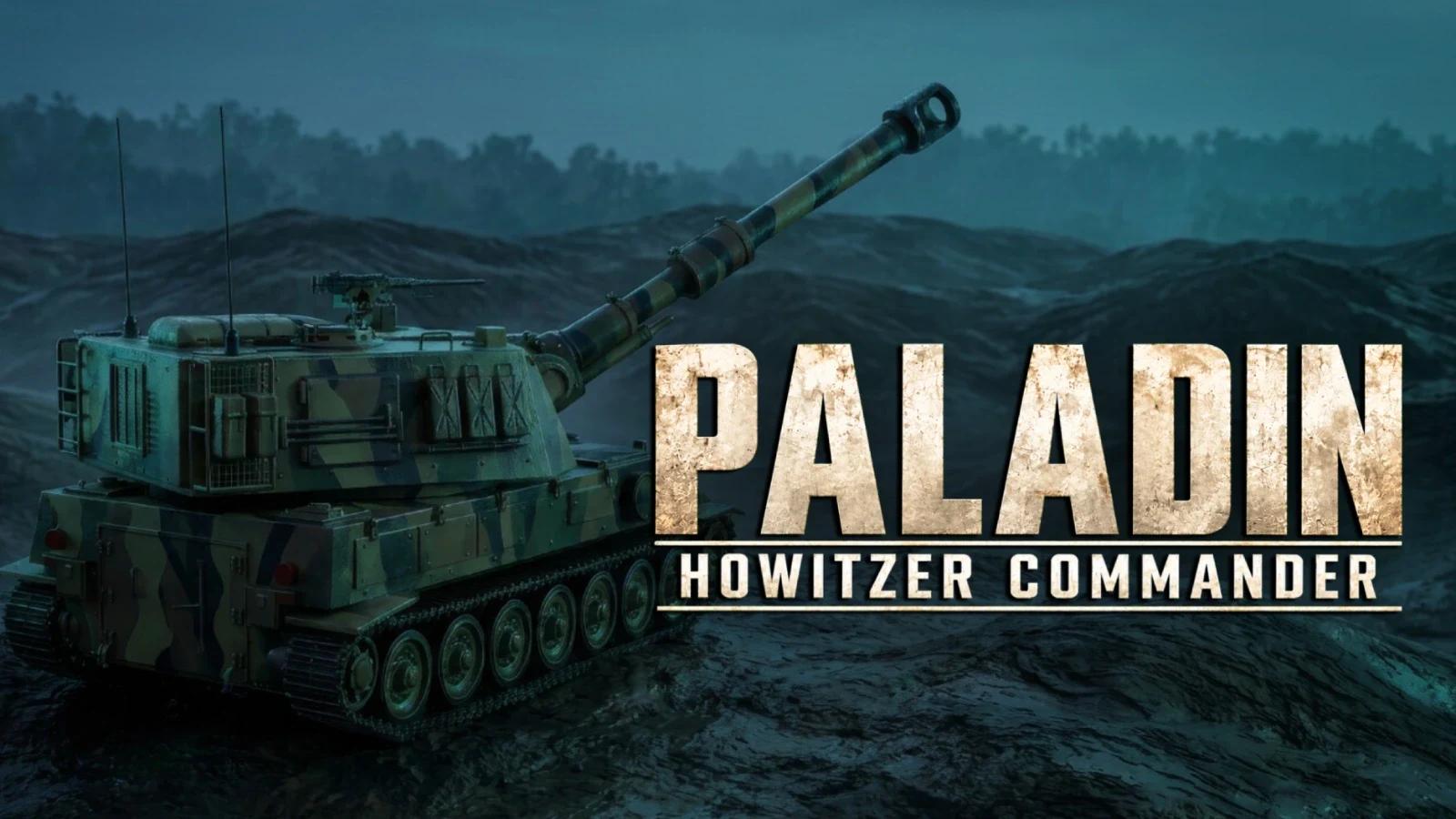
Built by two developers, driven by a passion for simulation: Paladin HC
Steam: Paladin HC Steam Page
Developer and Publisher: Fahrettin's House
Video: Paladin HC Extended Wishlist Trailer
More Than Pointing a Gun and Pulling the Trigger
When people think about artillery, they often imagine a large gun, a target and a shell flying across the battlefield. But anyone familiar with modern artillery operations knows there is much more happening behind the scenes.
Calculating firing solutions, understanding coordinates, determining range, selecting ammunition and propellant, communicating with command elements and managing the vehicle itself are all part of the process.
This is the experience we wanted to explore when we started developing Paladin HC, a realistic self-propelled howitzer simulation.
We are a two-person independent development team at Fahrettin's House. We don't have a large studio, a publishing budget or a dedicated marketing department. What we do have is a shared passion for military history, simulation games and the technical details that make complex systems interesting.
Paladin HC is our attempt to turn that passion into an interactive experience.

Understanding the Artillery Workflow
One of our main goals is to make players understand that artillery operations are about much more than firing.
In Paladin HC, players interact with the different stages of an artillery mission. They work with coordinates, range calculations, ammunition and propellant selection while following the operational procedures required to complete a fire mission.
Communication is another important part of the experience. Radio systems and command-and-control interactions help establish the relationship between the vehicle and the wider battlefield.
We want players to appreciate the decisions that happen before a shot is fired.
Rather than turning artillery into an arcade-style experience, we are building systems that encourage players to understand the process, pay attention to information and think through their decisions.
Our approach is informed by research into artillery systems, military history and publicly available technical references. We constantly try to understand not only what a system does, but also why it exists and how it contributes to the overall operation.

The Vehicle Is Its Own Little Battlefield
Something we particularly enjoy developing is the internal management of the vehicle.
Operating a self-propelled howitzer isn't simply about its weapon system. The crew also has to deal with the environment inside the vehicle.
Paladin HC incorporates several vehicle-management elements, including:
Internal air quality and ventilation.
Diesel and battery management.
Temperature and lighting.
Noise and other environmental conditions.
Communication and radio systems.
These elements help create an experience where the vehicle feels like an operational environment rather than just a weapon platform.
We are also exploring battlefield awareness through radar and counter-battery systems, adding another layer to the relationship between the player and the surrounding battlefield.

A Simulation Inspired by Real Artillery Systems
Our work is influenced by real-world self-propelled artillery platforms and their operational concepts.
The Paladin is the central vehicle of our simulation, and we have spent considerable time thinking about how its systems should interact.
We also draw inspiration from different historical and modern military environments. Planned scenarios include operations inspired by Vietnam, the Iran-Iraq War, Syria and Operation Euphrates Shield.
Our intention is not to recreate every historical event in exact detail. Instead, we want to give players different operational environments in which they can experience artillery procedures and understand how context changes the mission.
We are also working on an in-game encyclopedia and historical gallery to provide additional context for players interested in the equipment and history behind the simulation.

Two Developers, One Ambitious Project
Perhaps the most interesting part of Paladin HC is how it is being developed.
Fahrettin's House currently consists of two people.
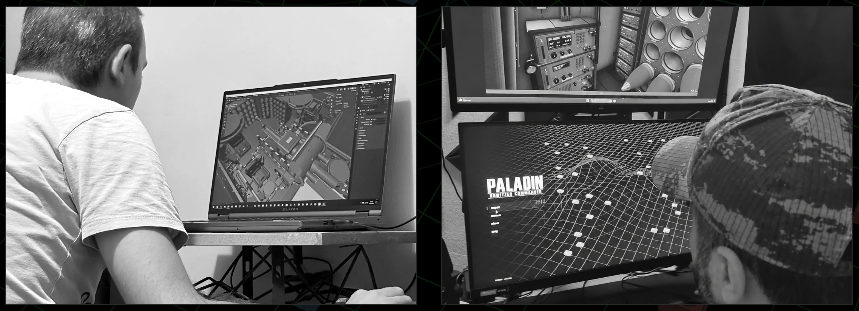
Fahrettin is responsible for programming, 3D modelling, systems and scenario development. I handle product development, publishing, quality assurance and the broader direction of the project.
We don't have the luxury of assigning every task to a different department. We have to make decisions, solve problems and learn new things as we go.
We have also had to make sacrifices to keep development moving. Much of the work has been done with limited resources, using the hardware and time available to us.
Our first objective was to build something playable. Then we wanted to let people experience it, test it and tell us what works and what doesn't.
The Steam Playtest is an important part of that process. We want feedback from people who understand military simulations, artillery systems and the expectations of the milsim community.
We know there is still work to do. We are not presenting Paladin HC as a finished military training product or a certified simulation tool. It is a game built around our interest in artillery operations, and we want to develop it further with the help of its players.

Why We Want to Hear From the Milsim Community
We believe that players who enjoy detailed military simulations have a different perspective on these systems.
They notice things that other players might overlook. They understand why communication, procedures, equipment limitations and operational details matter.
That is exactly the kind of feedback we want.
We would love to see milsim communities explore Paladin HC, discuss its systems and tell us what they would like to see improved or expanded.
Our ambition is to create an accessible but meaningful artillery simulation: something that introduces players to the complexity of artillery operations without unnecessarily turning every interaction into a frustrating exercise.
We are two developers building something we genuinely care about. If you are interested in artillery, military history or simulation games, we would be happy to have you take a look.
Paladin HC is currently available to follow on Steam, with its full release planned for March 5, 2027.
Comments (0)
Sign in to join the discussion.
Be the first to comment.